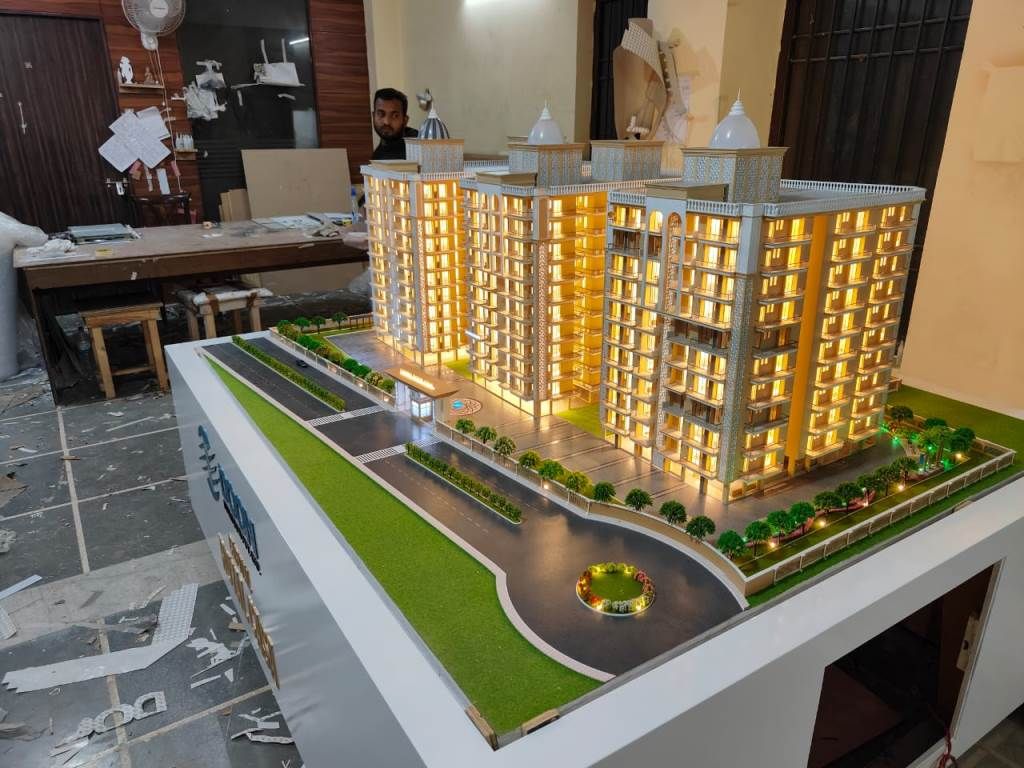
In architecture, engineering, and product design, 3D physical model making plays a crucial role in transforming concepts into tangible representations. These models help professionals visualize structures, test designs, and communicate ideas more effectively. With advancements in fabrication techniques, 3D models now combine precision, durability, and aesthetics, making them indispensable tools in various industries.
What is 3D Physical Model Making?
3D physical model making involves constructing scaled-down physical representations of buildings, products, or urban environments. Unlike digital 3D models, which exist in computer software, physical models allow designers to interact with real-world prototypes, facilitating design validation and refinement.
From architectural models showcasing structural layouts to product prototypes testing functionality, 3D modeling bridges the gap between concept and reality.
Why 3D Physical Models Matter
1. Enhanced Visualization & Design Validation
A physical 3D model provides a real-world view of proportions, spatial relationships, and aesthetics, helping designers refine their ideas before full-scale production.
2. Better Client & Stakeholder Communication
Clients and investors often struggle to visualize projects through blueprints or 3D digital renders alone. A physical model offers an intuitive way to grasp design elements, leading to quicker approvals and informed feedback.
3. Testing Functionality & Structural Integrity
For engineers and manufacturers, 3D physical prototypes allow testing of material properties, durability, and usability. This helps identify design flaws early, reducing costly revisions.
Methods & Techniques in 3D Physical Model Making
Modern 3D model fabrication combines traditional craftsmanship with advanced technology such as:
3D Printing – Uses precise layer-by-layer additive manufacturing to create highly detailed models.
Laser Cutting – Ideal for architectural models, ensuring sharp edges and intricate detailing.
CNC Milling – Produces durable prototypes with accurate material textures.
Handcrafting Techniques – Foam, acrylic, wood, and clay models still hold relevance in customized designs.
Applications of 3D Physical Models
Architectural Visualization – Builders and urban planners use models to showcase project layouts and refine massing.
Product Design & Manufacturing – Companies develop early-stage prototypes before mass production.
Engineering & Aerospace – Scale models help test fluid dynamics, aerodynamics, and mechanical systems.
Future of 3D Physical Model Making
With advancements in AI and automation, 3D model making is becoming faster, more cost-effective, and increasingly precise. Emerging trends include:
- Hybrid Digital-Physical Modeling using augmented reality overlays.
- AI-driven material optimization for sustainable manufacturing.
- Real-time 3D printing enhancements improving customization and scalability.
Conclusion
3D physical model making remains a vital process in design validation, client engagement, and product development. Combining artistry with cutting-edge fabrication methods, these models ensure clarity, accuracy, and efficiency, making them an essential tool in architecture, engineering, and manufacturing.