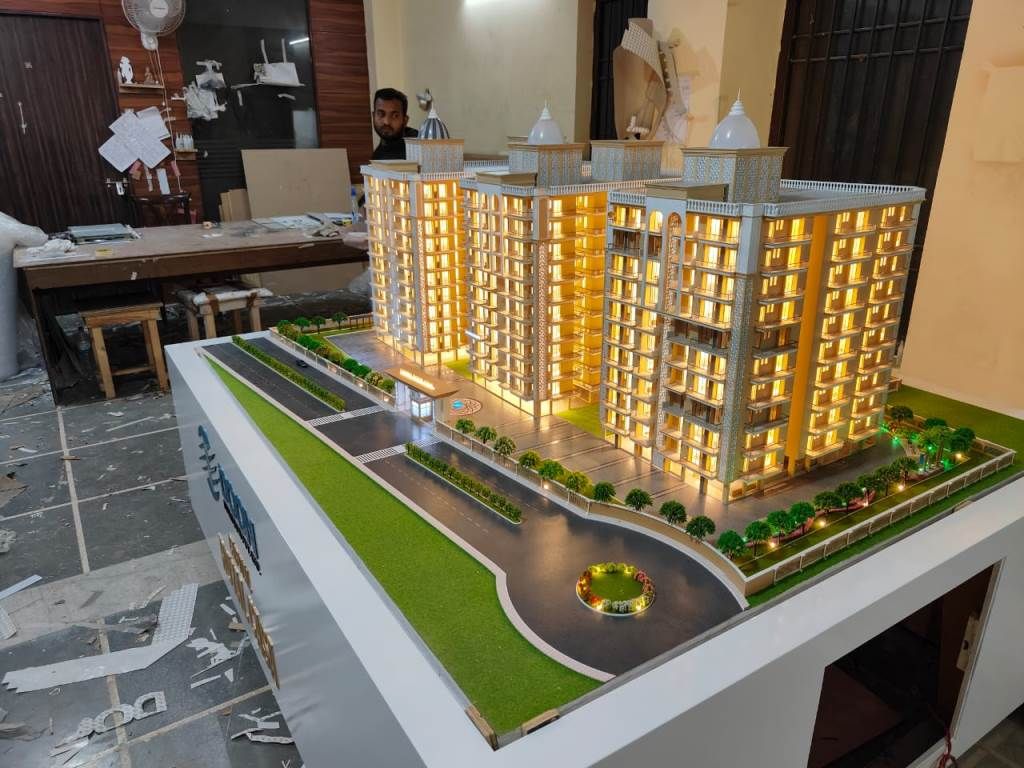
As digital visualization technologies continue to evolve, with high-resolution 3D modeling, virtual reality (VR), and augmented reality (AR) transforming design and planning processes, one might assume that traditional Physical Scale Models have become obsolete. However, despite these advancements, physical models remain an essential tool in architecture, engineering, and industrial design. They provide a tangible, immersive experience that digital simulations often struggle to replicate, ensuring precision, engagement, and better decision-making in large-scale projects.
The Unique Advantages of Physical Scale Models
1. Tangible Representation of Design
While digital 3D models offer high-resolution visualization, Physical Scale Models provide an unmatched tactile experience. Clients, stakeholders, and designers can physically interact with a model, gaining a more intuitive sense of scale, proportion, and spatial relationships. This helps them understand how different components fit together in real-world settings.
2. Enhancing Collaboration and Communication
In large-scale construction and architectural projects, effective collaboration between engineers, designers, and investors is crucial. While digital models can be viewed on screens, Physical Scale Models foster discussions in a way that encourages hands-on engagement. Decision-makers can examine models from multiple perspectives, identify potential design flaws, and suggest improvements without relying solely on virtual walkthroughs.
3. Bridging the Gap Between Concept and Reality
Digital visualization tools sometimes fail to communicate the full depth of a design concept, especially when assessing environmental impact, materials, or structural feasibility. Physical Scale Models help bridge this gap by offering a direct comparison of proportions, textures, and material interactions, making it easier to evaluate a project's practicality before full-scale construction begins.
4. Precision Testing and Prototyping
In sectors such as aerospace, automotive, and industrial engineering, physical models are crucial for prototype testing. Wind tunnel tests, stress analysis, and ergonomic evaluations often require physical replicas to observe real-world performance. While digital simulations can predict behavior, physical models provide definitive proof of structural integrity, ensuring designs meet safety and efficiency standards.
Balancing Digital and Physical Visualization
Although digital visualization has revolutionized the design process, integrating Physical Scale Models into development workflows enhances creative problem-solving. The most successful projects use a combination of both: digital models for rapid iteration and simulations, and physical models for validation, presentation, and final assessment.
Moving forward, hybrid approaches incorporating 3D printing, laser cutting, and CNC machining will further refine physical modeling. This technological synergy ensures that designers and engineers retain the best aspects of both mediums—speed and accuracy from digital tools, and tangible interaction from physical models.
Conclusion
Despite the advancements in digital visualization, Physical Scale Models continue to hold a vital place in design and planning. Their ability to provide a tangible, interactive experience makes them indispensable for conveying spatial relationships, validating designs, and fostering stakeholder engagement. As technology progresses, integrating physical and digital methodologies will ensure that projects achieve the highest standards of accuracy, creativity, and functionality.